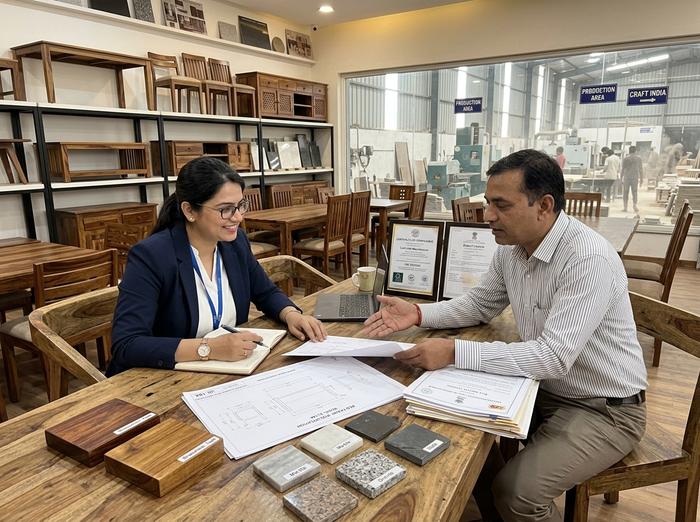
The fair is over. Your bag is full of brochures, your phone is full of booth photos, and your notebook has forty supplier names in handwriting that made sense at the time. Most buyers do nothing with this pile for a month — and by then, the suppliers have moved on to whoever followed up first. The visit was the easy part. What you do in the next two weeks decides whether those contacts become orders.
1. Sort the pile within 48 hours
Memory fades fast after five days on a show floor. Before anything else, go through every card, photo and note and sort suppliers into three piles: A for genuine prospects (right products, real factory, export experience), B for interesting-but-unverified, and C for polite no-thank-yous. Next to each A and B name, write one line on what you liked and one line on what worried you — that honest first impression is worth more than the glossy brochure.
If you kept a scoring sheet at the fair, this takes an hour; if you did not, do it now while faces are still fresh. Photograph the sorted piles so nothing gets lost. Our IHGF buyer's checklist covered working the halls — this is where that preparation pays off.
2. Send the follow-up email within a week
Suppliers judge buyers by follow-up speed. A buyer who writes within days is treated as a live order; a buyer who writes in two months is treated as a daydream. One email per supplier, and make it specific: the booth number, the name of the person you spoke to, the products you discussed, and a one-page specification attached. Vague "send me your catalogue and best prices" emails get vague replies.
Ask for four things in that first email: a formal quotation against your specification, the realistic lead time from order to shipment, the minimum order quantity per design and per shipment, and the trade terms the quote is based on. A clear written specification attached to this email does more for your quotes than any negotiation later.
3. Make the quotes comparable
Quotes you cannot compare, you cannot negotiate. Insist that every supplier quotes the same quantities, the same specification, and the same delivery terms — otherwise you are comparing a factory-gate price from one with a port-delivered price from another and learning nothing. Ask each quote to state its validity period, because raw-material prices move and a quote without an expiry date is a moving target.
Pay special attention to the trade terms: FOB, CIF and EXW quotes for the "same" product can differ enormously once freight, insurance and handling are counted. Our Incoterms explainer shows how to read them so your comparison is honest.
4. Shortlist to three, then move to samples
Do not request samples from ten suppliers — you will drown in parcels and evaluate none of them properly. Pick your top three from the quotes, and order samples of the exact items you intend to buy, in your colours and finishes, not the supplier's stock showroom pieces. Judge every sample against your written specification, not against your memory of the booth display.
Treat the sample round as a test of the supplier as much as of the product: how fast did they respond, did they follow the spec, how was the packing? Our sample request and evaluation guide walks through getting this stage right.
5. Verify before any deposit moves
This is the step fair buyers skip most often, because "we met them" feels like due diligence. It is not. A booth is a marketing expense; a factory is a different building, sometimes a different company. Before any deposit moves, confirm you are dealing with a manufacturer and not a trader: factory address, business registration and export documents, production photos or video, and references from existing export buyers — or an independent verification visit.
The warning signs are the same ones our manufacturer verification guide describes: reluctance to share a factory address, no export paperwork, pressure to commit quickly, or quotes disconnected from the quality you saw. A genuine manufacturer answers factory questions easily.
6. Negotiate with comparisons, not pressure
With three comparable quotes and approved samples in hand, you negotiate from facts. Tell each shortlisted supplier, honestly, that you are comparing a small number of finalists — it sharpens quotes without games. Negotiate on the full picture: specification compliance, lead time reliability, payment schedule, packing quality and after-sales handling of defects, not just the unit price. The cheapest quote with the weakest verification is usually the most expensive order you will ever place.
7. Keep the B-pile warm
Not every good supplier wins the first order. Send the B-pile a short, polite note: thank them, say you have gone with another supplier for this round, and that you will keep them in mind for the next one. Supplier markets shift — your chosen factory gets overbooked, a design changes, a second product line opens up — and the supplier you treated well six months ago answers the phone. Long-term supply chains are built from these small courtesies; our guide to building trust with Indian suppliers explains why this compounds.
Frequently asked questions
How soon after a trade fair should I follow up with suppliers?
Sort your contacts within 48 hours and send the follow-up email within a week. Suppliers prioritise buyers who follow up quickly — a fast, specific follow-up marks you as a live order, while a two-month silence marks you as a daydream.
What should the first follow-up email contain?
Reference the booth number and the person you spoke to, recap the products discussed, attach a one-page written specification, and ask for four things: a formal quotation against that spec, realistic lead time, minimum order quantities, and the trade terms the quote is based on.
What if a supplier stops replying after the fair?
Follow up twice, a week apart, then move on — silence is information. Suppliers who go quiet before any money changes hands are telling you how communication will work when problems arise. Put your energy into the suppliers who stayed responsive.
How many suppliers should I develop samples with?
Two or three. More than that and you cannot evaluate properly; fewer and you have no comparison and no backup. Shortlist from comparable written quotes first, then sample only the finalists — and judge every sample against your specification, not your memory of the booth.

Published by QualityLink Global Sourcing Team
Operating directly out of Jodhpur and Jaipur, Rajasthan. Our team provides hands-on supplier verification, factory audits, moisture testing, quality control, and container loading supervision across North India.
Need On-the-Ground Sourcing or QC Support in India?
If you have a prospective supplier in Rajasthan or North India, an active production run, or upcoming container loading, we can step onto the factory floor to verify specs and eliminate export risks.