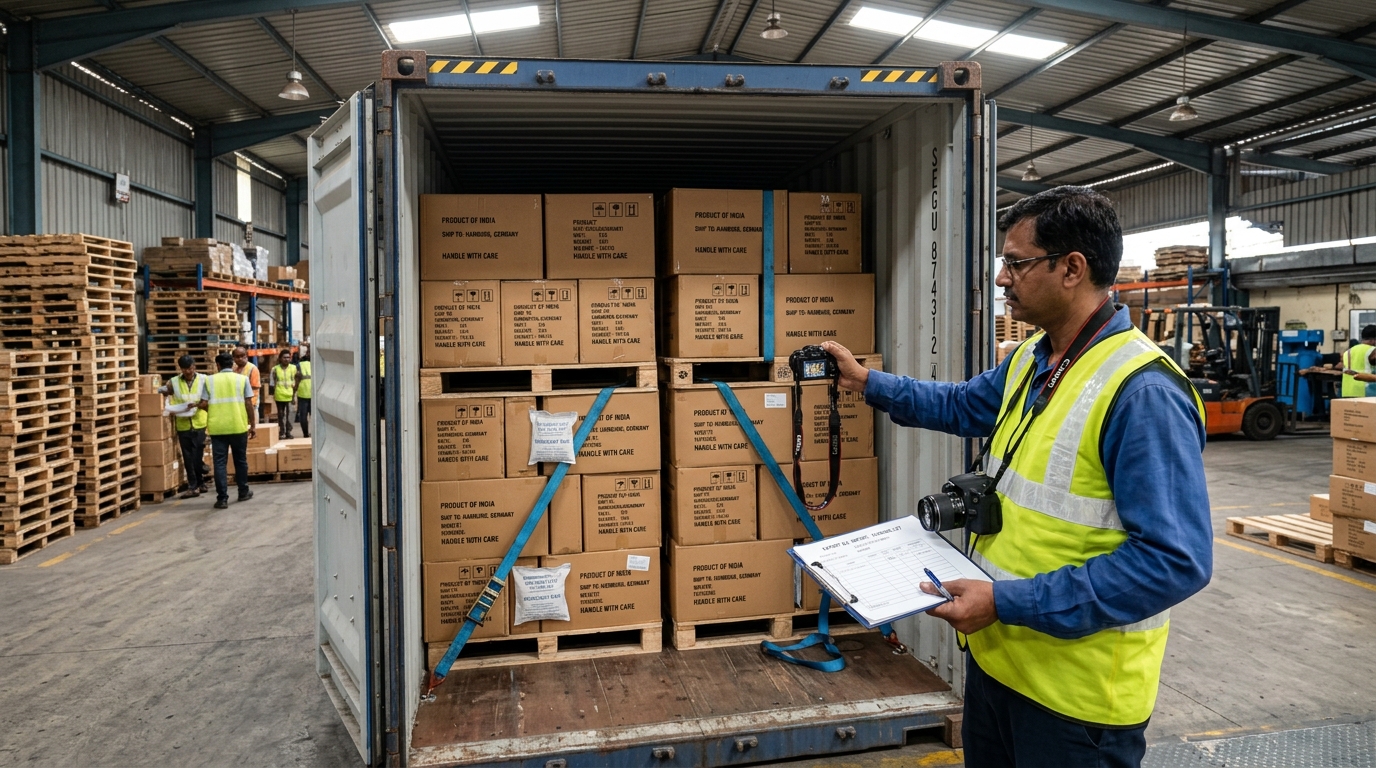
What AQL Actually Means
AQL stands for Acceptable Quality Limit. It is the worst average defect rate you are willing to accept in a production lot, expressed as a percentage. An AQL of 2.5 for major defects means that, on average, you accept up to 2.5% of pieces having a major defect. It is a sampling standard, not a guarantee — it defines how many pieces get checked and how many defects are allowed before the lot fails.
The tables below follow ISO 2859-1 (ANSI/ASQ Z1.4), the standard used across the inspection industry for single sampling under normal inspection at General Inspection Level II — the default for most consumer goods.
Step 1: Find Your Sample Size
Locate your order quantity in the left column. Read across to get the sample size — the number of pieces the inspector will actually check.
| Order quantity (lot size) | Code letter | Pieces to inspect |
|---|---|---|
| 91 – 150 | F | 20 |
| 151 – 280 | G | 32 |
| 281 – 500 | H | 50 |
| 501 – 1,200 | J | 80 |
| 1,201 – 3,200 | K | 125 |
| 3,201 – 10,000 | L | 200 |
Step 2: Find How Many Defects Are Allowed
Take your sample size row and read across to your agreed AQL column. The number shown (Ac) is the maximum defects allowed — find one more and the lot fails. Common commercial practice: AQL 2.5 for major defects, AQL 4.0 for minor defects, and zero tolerance for critical defects.
| Pieces inspected | AQL 1.0 (Ac) | AQL 2.5 (Ac) | AQL 4.0 (Ac) |
|---|---|---|---|
| 20 | 0 | 1 | 2 |
| 32 | 1 | 2 | 3 |
| 50 | 1 | 3 | 5 |
| 80 | 2 | 5 | 7 |
| 125 | 3 | 7 | 10 |
| 200 | 5 | 10 | 14 |
A Worked Example
You ordered 800 wooden chairs. Lot size 800 falls in the 501–1,200 band: code letter J, sample size 80 pieces. Your agreed levels are AQL 2.5 for major defects and 4.0 for minor. The inspector checks 80 chairs. If she finds 5 or fewer major defects, that criterion passes; the 6th major defect fails it. For minor defects, up to 7 are allowed; the 8th fails. One critical defect — a broken leg, a sharp splinter hazard — fails the inspection on its own.
What AQL Does Not Do
AQL sampling does not guarantee a defect-free shipment — it gives you a statistically grounded pass/fail decision. It also assumes the sample is drawn randomly from finished, packed goods; inspecting half-finished production with AQL tables produces meaningless numbers. Agree the AQL levels, the inspection level, and the defect classification with your supplier before production starts, and put them in the purchase order. A table everyone agreed to in advance is a decision tool; a table introduced after a failure is an argument.
Need Help with India Sourcing?
QualityLink Global is a Jodhpur-based sourcing agent and QC specialist. First consultation is free.
Get In Touch