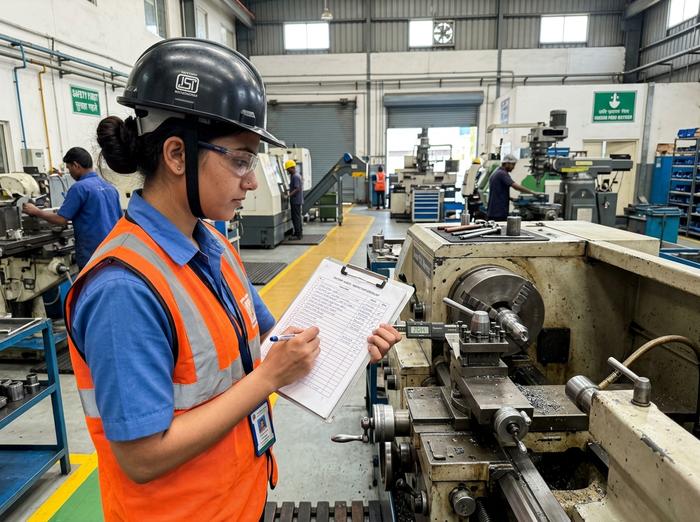
The order was agreed over WhatsApp. The factory started cutting wood the same week. Three weeks later the cartons arrived looking nothing like the approved sample, and nobody could agree what "same as sample" had meant. Almost every importer's worst argument with an Indian factory starts this way — and almost every one of them traces back to a purchase order that said too little. A purchase order is not admin paperwork. It is the one document your inspection rights, your acceptance criteria and your leverage all hang from. Here is how to write one that Indian factories actually follow.
1. Start with the specification, not the order
A purchase order that says "as per sample" is a purchase order that says nothing. Samples fade, get lost, or get quietly "improved" during production. Your PO should reference the agreed specification by document name and date — for example, "Product specification v2, dated 12 October 2026" — so there is one written definition of the product that both sides signed off on.
If you do not have a written specification yet, write one before you write the PO. Our guide to writing clear product specifications shows what belongs in it: dimensions, materials, colours, finishes and tolerances — the measurable facts that end arguments later.
2. Describe every line item in measurable terms
Each line item needs more than a product name and a quantity. State the size, colour or finish, and packing unit per line, and put a number on what "acceptable" means: dimensional tolerance, colour tolerance, and a short-shipment rule — how much under or over the ordered quantity you will accept.
Factories work to what is written. A quantity line that says "500 pieces, tolerance plus or minus 2%" gives the packing team a target and the inspector a verdict. Our guide to verifying counting and packing before shipment explains how this line gets checked at the factory gate.
3. Fix the delivery date and trade terms in writing
"Delivery in 45 days" means nothing until you define delivery. Is it the ex-factory date, the shipment date, or the arrival date at your port? Write the definition into the PO, name the exact date, and state the agreed trade terms alongside it — the three letters that decide where the factory's responsibility ends and yours begins.
This is also where festival calendars bite. Indian production slows around Diwali, Holi and regional holidays; a delivery date that ignores them was never realistic. Our Incoterms explainer shows how FOB, EXW and CIF divide up the journey, so the term written on your PO matches what both sides actually agreed.
4. Write in your inspection rights
The strongest clause in a PO is the one that lets an independent inspector walk the factory floor before the goods ship. State it plainly: the buyer, or the buyer's appointed inspector, may inspect the goods before shipment, and goods that fail inspection are not shipped until the defects are corrected and re-inspected.
Factories that know an inspection is coming produce differently from factories that assume nobody is watching. Our walkthrough of a pre-shipment inspection in India shows exactly what the inspector checks, so the clause in your PO and the inspection plan agree with each other.
5. Ban silent changes and subcontracting
The two most expensive words in Indian sourcing are "minor change": a different wood, a cheaper fitting, a thinner gauge, made without telling you. Your PO should say it outright — no changes to materials, dimensions, finishes or processes without the buyer's written approval, and the order may not be passed to another factory or workshop without written consent.
This clause is what turns a deviation into a breach instead of a misunderstanding. Our guide on supplier subcontracting covers what to do when you discover the clause was ignored — but a signed PO with this line in it prevents most cases before they start.
6. Spell out packing and marking
Packing is where good products go to die. Specify the carton type, the inner packing for fragile items, whether cartons go loose or on pallets, and the marks on every carton: your PO number, item code, quantity and handling symbols. Photographs of the approved packing from the sample round make a good annex.
Indian export packing has its own standards and its own failure modes — crushed corners on long sea voyages, moisture damage in the monsoon months. Our packing and crating standards guide details what export-worthy packing looks like for fragile goods.
7. Sign it twice and keep the paper trail
An unsigned PO is a suggestion. Get the factory's authorised signatory to sign and date it, keep your own signed copy, and treat every later change as a numbered written amendment — "Amendment 1, dated …", attached to the original. Verbal promises made on a factory visit do not exist unless they are written into the PO.
Keep the whole chain in one place: the PO, the specification it references, the sample approval records, and every amendment. If a disagreement ever becomes serious, the side with the paper trail wins the argument before it starts. That folder is also what your inspector works from on the factory floor.
A purchase order written this way does two jobs at once: it tells the factory exactly what "done" looks like, and it gives you a written basis for every quality conversation that follows — inspection, acceptance or dispute. Factories respect detailed POs; they signal a buyer who will notice. Write it once, carefully, and it protects every order after.
Frequently asked questions
Can my purchase order just be an email thread?
A long email thread is better than nothing, but it is hard to enforce — terms get contradicted across messages and key details hide in attachments. One signed document with a PO number, a date and both signatures beats fifty messages when there is a disagreement.
What if the factory will not sign the purchase order?
Treat that as information, not as a negotiation. A factory that signs detailed purchase orders is a factory that plans to follow them. Reluctance to sign usually means the delivery date or the specification was never realistic — find out which, and fix it before production starts, not after.
How do I handle changes after the PO is signed?
As numbered written amendments attached to the original — "Amendment 1, dated …", signed by both sides. Never accept a verbal change on a factory visit or a WhatsApp voice note; if it is not written into the PO, it did not happen, and the inspector will judge the goods against the last signed version.
Does a detailed PO slow the factory down?
The opposite. Most production delays come from the factory stopping to ask questions the PO should have answered — which finish, which packing, whose cartons. Clarity removes those pauses, so a detailed purchase order usually speeds production up instead of slowing it down.

Published by QualityLink Global Sourcing Team
Operating directly out of Jodhpur and Jaipur, Rajasthan. Our team provides hands-on supplier verification, factory audits, moisture testing, quality control, and container loading supervision across North India.
Need On-the-Ground Sourcing or QC Support in India?
If you have a prospective supplier in Rajasthan or North India, an active production run, or upcoming container loading, we can step onto the factory floor to verify specs and eliminate export risks.