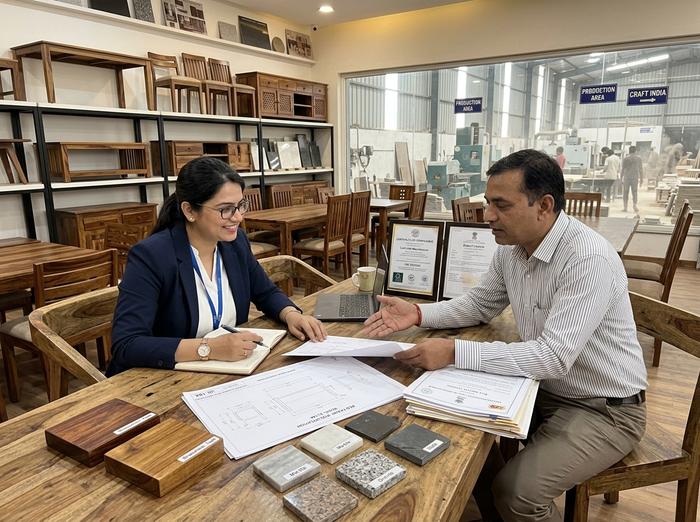
The order is confirmed, the sample is approved, and production starts on Monday. Yet the first time buyer and factory sit down together to talk through the details in full is often weeks later — after the first problem has already been made, packed, or shipped. A pre-production meeting exists to reverse that order. One structured conversation before work begins, covering the sample, the specification, the schedule and the checkpoints, prevents most of the disputes that otherwise surface at final inspection, when fixing them is expensive and slow.
1. Hold it after the order, before the material is cut
Timing is the whole point. The meeting should happen once the purchase order is placed and the sample is approved, but before bulk material is bought or the first piece is cut. At that moment everything is still cheap to change: a different timber, a corrected dimension, a clearer colour reference. A week into production, the same change means rework, wasted material and a missed ship date.
Keep the meeting short and working, not ceremonial. The factory side should include the person who will actually run the production — usually the production manager or owner — plus whoever handles your account day to day. From your side, whoever will judge the finished goods should be in the room, whether that is you, your agent, or your inspector. A video call works well for this meeting, provided the sample and the documents are on screen and in hand at both ends. Our guide to inspecting a factory over video call covers how to run a remote factory conversation so nothing important stays off camera.
2. Put the approved sample on the table — literally
Start with the physical sample both sides approved, not with a photograph of it. If the meeting is remote, hold it up to the camera from every angle and confirm, out loud, that this is the reference piece production will be judged against. Where possible, keep one sealed reference sample with the factory and one with you, each marked with the order number and the approval date.
Then agree what "matches the sample" actually means for your product. Handmade goods vary — wood grain, hand-painted finish, woven texture — and pretending otherwise only creates arguments later. Name the variations you accept and the ones you do not: a knot in the timber is fine, a different shade of stain is not; slight weave irregularity is expected, a missed motif is not. Write those lines down during the meeting, not afterwards from memory.
3. Walk the specification line by line
The specification document should be read aloud together, item by item, and every line confirmed or corrected. Materials and their grades, overall dimensions and the tolerance allowed on each one, colours against a physical reference rather than a name, finishes, hardware, stitching or joinery details, labels and carton marks, and the packing method. If a line cannot be confirmed on the spot — a hardware item that needs a supplier check, a dye lot that needs matching — record it as an open point with a named person and a date, and do not let production start on that item until it is closed.
This is also the moment to confirm the specification version. If the sample was approved against version two and the factory is working from version one, no inspection regime will save the order. Agree the version number in the meeting and put it on the purchase order and the inspection checklist. Our guide to writing clear product specifications sets out what that document needs to contain so this conversation has something solid to work from.
4. Agree the production plan and the checkpoints
Ask the factory to walk you through the production sequence in order: material procurement, each making stage, finishing, packing. For each stage, agree two things — when it will happen, and how you will know it happened correctly. A plan that says "production takes four weeks" tells you nothing; a plan that says "carcasses complete by week two, first finished piece available for checking on day ten, packing in week four" gives you points to act on.
Decide the checkpoints now: a first-off piece checked against the sample before bulk work continues, an in-line check partway through, and the final pre-shipment inspection. Agree what happens if a checkpoint fails — work pauses while the cause is fixed, rather than continuing to produce pieces with the same fault. That single agreement is what turns inspection from a verdict at the end into a control during production, and it connects directly to our explanation of why pre-production inspection matters — the meeting is where the inspection plan is born.
5. Settle packing and marking before the last week
Packing is almost always agreed last, which is exactly why it goes wrong most often. In the pre-production meeting, confirm the carton type and size, the inner packing for fragile parts, how many pieces go in each carton, the carton marks and labels, and whether goods will be palletised or loose-loaded. Photograph a packed sample carton if you can, and keep the photo with the meeting note.
Agreeing packing early also protects the schedule. Cartons, printed labels and export packing materials all have their own lead times, and a factory that discovers a carton shortage in the final week will either delay shipment or pack in whatever is available. Neither outcome is a surprise you need. Our guide to purchase orders factories actually follow shows how to carry these packing decisions into the order document itself, so they are contractual rather than conversational.
6. Write it down, and get both sides to sign it
A meeting that is not written down will be remembered differently by each side, and the version that survives is usually the one that suits whoever is arguing. Within a day of the meeting, circulate a short note: decisions taken, open points with owners and dates, the agreed schedule and checkpoints, and the specification version. Ask the factory to confirm it in writing, and keep the confirmed note with the purchase order.
This note becomes the reference for everything that follows. When a sample round raises a question, the note answers it. When an inspector checks the first-off piece, the note is the standard. When a repeat order starts to drift — the slow change in materials or finish that creeps in over several orders — the note from the first order is the baseline you return to. Our guide to handling quality fade in repeat orders describes that drift in detail; a signed pre-production note is the simplest defence against it.
7. If the supplier resists the meeting, listen to that too
Most established factories welcome a structured pre-production conversation — it reduces their rework as much as your risk. If a supplier repeatedly avoids one, keeps the production manager out of the room, or treats written confirmation as an insult, treat that as information, not as a scheduling problem. It usually means production is already committed elsewhere, the specification has not been read, or the factory is not set up to be checked mid-production.
You do not need to end the relationship on the spot. You do need to adjust for what you have learned: tighten the sample approval, arrange an independent first-off check, or reconsider whether this is the right factory for an order you cannot afford to have go wrong. A supplier's attitude to a meeting before production is a reliable preview of their attitude to a problem during it.
Run this way, a pre-production meeting takes an hour or two and replaces the most expensive conversation in importing — the one that happens after the container is loaded, when every option is difficult to reverse and every delay compounds. Agree the sample, the specification, the schedule and the checkpoints while everything can still be changed, write it down, and let production start from a page both sides have signed.
Frequently asked questions
How long should a pre-production meeting take?
For a straightforward order, one to two hours is usually enough: long enough to walk the specification line by line and agree the schedule and checkpoints, short enough that the factory's production staff can actually attend. A complex order with several materials or finishes may need a second session for open points, but the first meeting should still settle the sample, the specification version and the checkpoint dates.
Does the meeting need to happen in person, or is a video call enough?
A video call is enough for most orders, provided the approved sample is shown on camera and the specification document is shared on screen so both sides are looking at the same version. In-person attendance matters more for a first order with a new factory, or where the product involves finishes and colours that a camera renders unreliably — in those cases, seeing the sample in hand is worth the trip.
What if production has already started?
Hold the meeting anyway, as early as you can. You lose the chance to change materials or the production sequence cheaply, but you can still agree the specification version, the checkpoints for the remaining stages, and the packing and marking — and you will discover quickly whether the work so far matches the sample. A late meeting is worth far more than no meeting.
Who should attend from the buyer's side?
Whoever will judge the finished goods: you, your sourcing agent, or your inspector. What matters is that the attendee can confirm the sample, approve specification decisions and commit to checkpoint dates on the spot. Sending someone who must refer every question back to you turns the meeting into a message relay and wastes the factory's time.

Published by QualityLink Global Sourcing Team
Operating directly out of Jodhpur and Jaipur, Rajasthan. Our team provides hands-on supplier verification, factory audits, moisture testing, quality control, and container loading supervision across North India.
Need On-the-Ground Sourcing or QC Support in India?
If you have a prospective supplier in Rajasthan or North India, an active production run, or upcoming container loading, we can step onto the factory floor to verify specs and eliminate export risks.