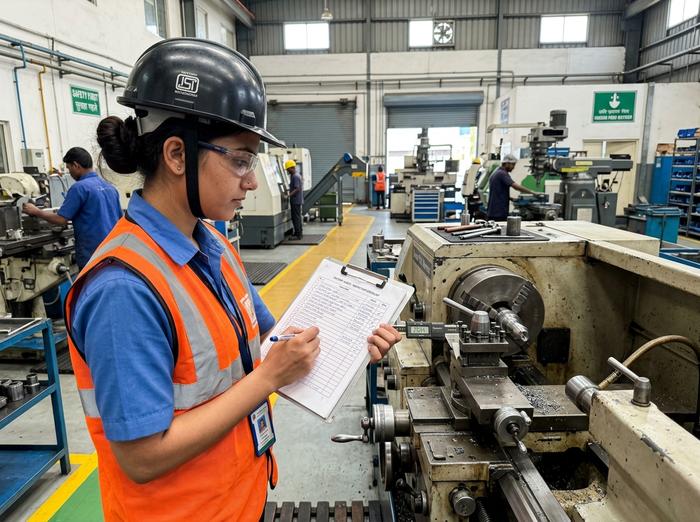
A flight to India, a week in hotels, and days driving between industrial zones — visiting every prospective supplier in person is the gold standard, and the most expensive part of building a supply chain. The good news: you don't need to fly in for the first screening. A well-run live video walkthrough of the factory, done with a clear plan, catches most supplier red flags before you commit to an on-site audit or a deposit.
The key word is live. A recorded video or a set of emailed photos proves very little — footage can be borrowed, staged, or years old. What you want is an unscripted walk through the premises, in real time, where you decide what gets shown next. Here's how to run it.
1. When a Video Walkthrough Is Enough — and When It Isn't
A video call is a screening tool, not an audit. It is enough to answer the first big question: is this a real, operating factory that matches what the supplier claims? It is not enough to approve a supplier or send a deposit. Think of it as the filter that decides whether a supplier is worth the deeper, on-site checks — independent supplier verification of documents and premises, and a full-day factory audit before any serious commitment.
Run the video walkthrough early — before you pay to rush samples or start serious negotiation. If it fails, you've saved yourself weeks.
2. Set the Ground Rules Before the Call
How the supplier responds to these requests tells you as much as the walkthrough itself:
- Insist on live, not recorded — the walkthrough happens in real time, with you directing the route.
- Ask for daylight hours on a working day — a factory filmed in the evening or on a holiday tells you nothing about daily operations.
- One person, one phone — the person walking should work on the floor (a production manager or supervisor), not the sales executive.
- Request it at short notice — a day or two, not two weeks. A genuine factory can arrange this quickly; an operation that needs a fortnight to "prepare the factory" is telling you something.
- Confirm the full route upfront — outside the gate, the shop floor, raw material storage, finished goods, and the packing area. No offices-only tours.
3. The Walkthrough Route — What to Ask Them to Show
Don't let the supplier choose the tour. Direct it yourself, in this order:
- Start outside — the factory gate and name board. The company name should match the entity on their quotation and documents. Note the address and the surroundings.
- The shop floor, wide angle first — how many workers are present, how many workstations are active. Then close-ups: ask them to hold the phone near a machine that is actually running.
- Raw material storage — timber stacks, stone slab inventory, metal ingots, fabric rolls, whatever fits your product. A factory with no raw material on hand is a showroom, not a manufacturer.
- Work in progress — ask to see your type of product at different stages of making. If they claim to produce it, there should be evidence of the process, not just finished samples on a shelf.
- The QC and packing area — where finished goods are checked and packed. Ask them to open a random packed carton on camera.
- Finished goods and dispatch — cartons with shipping marks. Different consignee names on cartons are normal for an exporter serving multiple buyers; no cartons at all in a supposedly busy unit is not.
4. Red Flags That Show Up on Camera
- Machines off and floors empty during working hours — an operating factory hums.
- A tour that stays in the office or showroom — if they won't walk the floor, ask why. A refusal is itself an answer, and our guide on factory vs. trading company explains what that usually means.
- Suspiciously clean, empty floors — real production leaves sawdust, offcuts, and half-finished pieces behind.
- The camera never lingers — rushed pans and quick cuts can hide empty areas. Ask them to slow down and hold the frame on details.
- Documents that don't match the name board — if the company on screen differs from the company on paper, pause and run proper document checks before going further.
- Repeated "no network" excuses — connections do drop, but a business that exports worldwide can usually manage a video call. Offer to reschedule once; a pattern of avoidance is the signal.
5. Questions to Ask Live on the Shop Floor
Ask these while you're looking at the relevant area — answers are more honest when the evidence is in frame:
- How many workers are on the floor today, and how many machines are running?
- What is your monthly capacity for this product — and what are you producing this week?
- Do you subcontract any part of the process? Which part, and to whom?
- Who checks quality before packing, and what happens to rejected pieces?
- Can you show me the raw material for my product and where it is stored?
- Which countries do you currently export to — and can you show me cartons marked for an export buyer?
6. Record, Timestamp, and Cross-Check Everything
With the supplier's permission, record the call — most buyers do this over WhatsApp or a Teams call and file the recording with the supplier's dossier. Screenshot the name board, the shop floor, and any documents shown on camera. Then cross-check: does the address match their website and registration documents? Does the scale of the operation match the volumes they quoted you? Our guide to what good inspection documentation looks like sets the standard of visual evidence worth keeping.
A clean video walkthrough doesn't approve a supplier — it earns them the next, deeper check. Before any deposit changes hands, work through the document and premises checks in our pre-deposit verification guide, and for significant orders put an independent auditor on the floor. That sequence — video screen, document verification, on-site audit — is how experienced buyers commit with confidence. See where each check fits in our quality control services.
Frequently Asked Questions
Is a video call enough to approve a supplier and pay a deposit?
No. A video walkthrough is a screening layer — it tells you whether the supplier is worth investigating further. Approval and deposits should wait for document verification and, for significant orders, an independent on-site audit.
What if the supplier refuses a live video call?
One genuine connectivity problem is plausible — offer to reschedule once. A pattern of refusal, excuses, or "recorded video only" offers is itself useful information. Genuine manufacturers rarely refuse a short live walkthrough.
Can someone run the video inspection on my behalf?
Yes. A sourcing agent or inspector can join the call with you, or visit the factory in person and send timestamped photos and video. That sits between a DIY video call and a full-day scored audit — see our quality control services for where each check fits.

Published by QualityLink Global Sourcing Team
Operating directly out of Jodhpur and Jaipur, Rajasthan. Our team provides hands-on supplier verification, factory audits, moisture testing, quality control, and container loading supervision across North India.
Need On-the-Ground Sourcing or QC Support in India?
If you have a prospective supplier in Rajasthan or North India, an active production run, or upcoming container loading, we can step onto the factory floor to verify specs and eliminate export risks.