Why Saharanpur matters for carved wood buyers
Saharanpur, in Uttar Pradesh, is the wood carving town of India. Generations of families have been carving Sheesham here for over a century — jali screens, carved panels, little boxes with perfect mitred corners. This is where the best of it comes from.
We're QualityLink Global, a sourcing and QC consultancy founded in 2012 in Jodhpur, Rajasthan. Not a manufacturer — we work for buyers. Our job is to stand between you and the workshop, and make sure the order goes right.
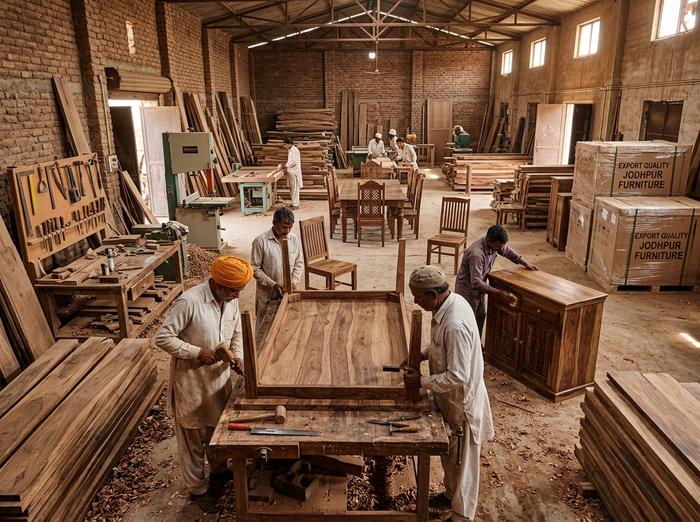
Saharanpur — the wood-carving city of Uttar Pradesh, home to generations of master carvers. (Photo: Wikimedia Commons)
What to source from Saharanpur
- Hand-carved jali screens and room dividers — the town's signature piece
- Sheesham wood wall panels and door panels with deep relief carving
- Carved mirror frames, from simple borders to full floral work
- Wooden giftware and keepsake boxes — small carved items in volume
- Architectural elements — carved corbels, brackets, pilasters, ceiling panels
Saharanpur's strength is hand work, not machine work. If you need the human touch — characterful, genuinely hand-carved detail — this is the right place. If you need perfectly identical pieces in the thousands, we'll tell you honestly that another town suits you better.
Where Saharanpur orders go wrong
The classic problem: the sample is gorgeous, the bulk run is not. The master carver does the sample, then your order goes to his junior staff and the carving loses its sharpness. The detail goes flat, and you only spot it when the container arrives — too late.
Second problem: unseasoned timber. Sheesham is a hardwood, and it moves if it was not dried properly. Panels crack along the grain. Joints open up. It looks fine on packing day — then six weeks in a humid shipping container, and your client is sending you photos you do not want to see.
Third problem: finish. One piece is warm honey, the next two shades darker — the stain is mixed by eye, batch to batch. Lined up in a showroom, they look like different orders.
Here is how it usually plays out. A buyer in the UK orders 200 carved boxes. The sample was perfect. He pays 50% advance. Three months later the shipment arrives: glue squeeze-out on half the boxes, and the stain varies so much he cannot sell them as a set. He tells us afterwards, when there is nothing anyone can do. Our checks would have caught all of it on the workshop floor, weeks before packing.
What we actually do for you in Saharanpur
- We visit the workshops ourselves and report back with photos — who actually carves, and how
- We compare bulk pieces against your approved sample, carving detail by carving detail
- We check timber moisture with a meter before pieces go into finish — catching the cracking risk early
- We check finish consistency across the whole lot, not just the top layer of the stack
That is the whole offer — no middleman mark-ups. You pay the workshop directly, and you pay us for our eyes and our time on the ground. More about how we work is on our site.
How the Saharanpur wood trade actually works
Saharanpur's carving industry runs on karigars — master artisans, many of whom learned from their fathers and grandfathers. The workshops are small, often a dozen carvers in a courtyard, and the best ones have waiting lists. When an exporter lands a big order, the work gets distributed across multiple workshops. That's when the carving detail starts varying: the master did your sample, his apprentices did the bulk run.
The timber question comes first, though. Saharanpur works mostly in Sheesham and mango wood. Unseasoned Sheesham will crack within months of reaching a dry climate — and "seasoned" gets claimed a lot more than it's done. We check with a moisture meter on the actual production timber, not on a showpiece plank. Anything above the agreed spec gets rejected before a single chisel touches it.
Then there's the thekedar system. Many exporters don't employ carvers directly; they work through contractors who distribute the work. Nothing wrong with that, but it means the exporter may never have seen the workshop where your screens are being carved. We visit the actual carving units, compare the work-in-progress against your approved sample, and photograph the detail level. If the bulk carving is shallower or rougher than the sample, we catch it while there's still time to redo.
Finishing is the final trap. A rushed polish hides a multitude of sins — for about three weeks. Then the uneven stain and missed spots show through. We check finishes in natural daylight, not under the workshop's yellow bulbs, and we check the backs and undersides too. That's where the shortcuts live.
How it works
Pricing is simple: 5–10% commission on order value, or a $1,500–$3,000/month retainer depending on scope. A single inspection visit runs about $500.
Questions buyers actually ask us
Can you just find me a carver for one small order?
Yes. Small orders are fine — the commission model usually suits them better than a retainer.
How do I know the workshop won't cheat me?
You don't, from abroad — that's why we're on the floor. We photograph the work, check the timber, and compare against your sample. A workshop that knows it's being checked tends to stay honest.
Do you take a cut from the workshop too?
No. We're paid by you, not the workshop — that's what keeps our reports honest.
Can you handle shipping?
We coordinate with your forwarder and supervise packing and loading — and stand at the container checking what's going in.
What if something still goes wrong?
We flag problems while they can still be fixed. If a workshop won't fix a genuine defect, you see the report before paying the balance — your call. No surprises at your end.
Talk to us about your Saharanpur order
Email qualitylinkglobal@gmail.com or call/WhatsApp +91 9660837666.
First conversation is free — tell us what you need and we'll give you a straight answer on whether Saharanpur fits.