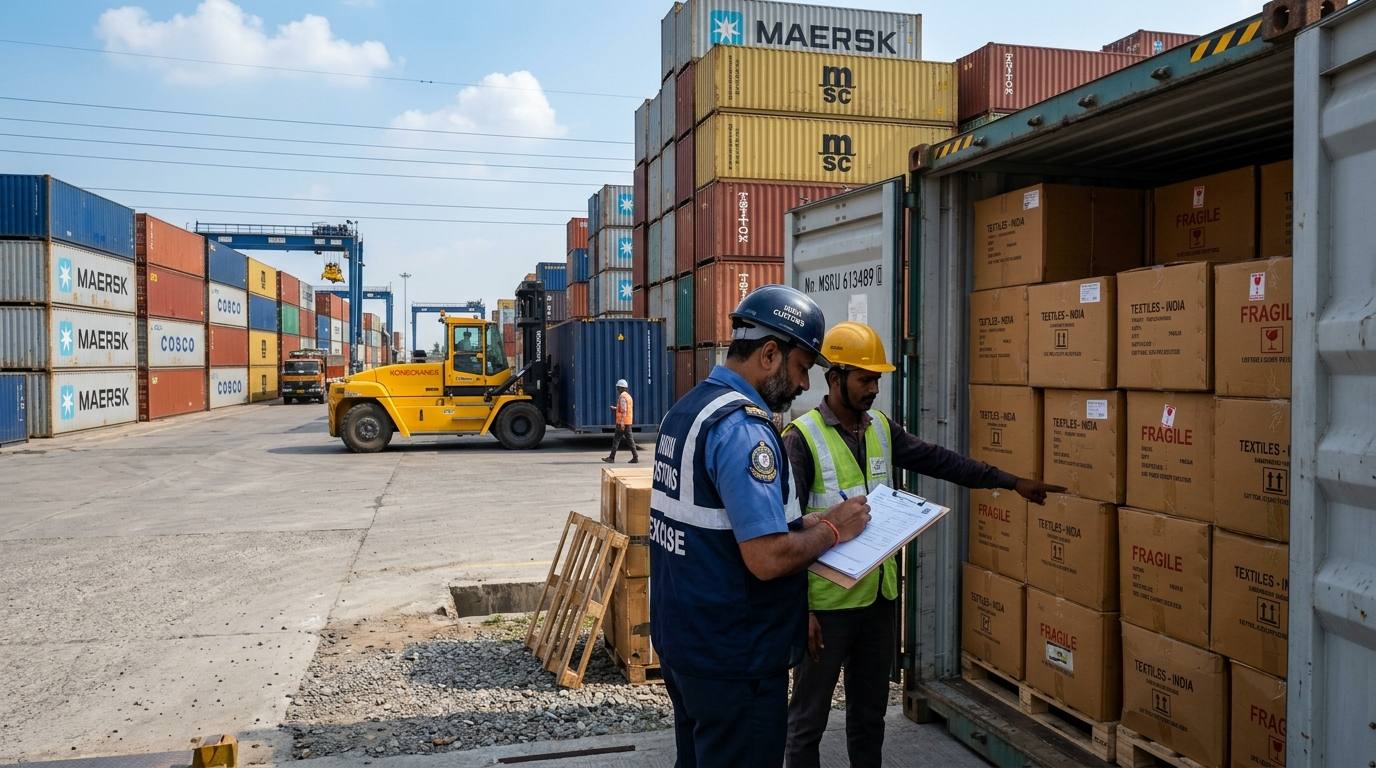
Manufacturing your goods in India is only half the battleâthe other half is getting them safely across the ocean to your warehouse. An export sourcing agent in India acts as your technical and logistics guardian from initial supplier matching all the way to container sealing and customs clearance.
Navigating Indian export processes requires managing documentation, fumigation rules, dry port rail freight, and ocean shipping lines. Here is how a professional product sourcing agent coordinates the entire export lifecycle.
The Export Documentation You Must Verify
Before cargo leaves India, several critical statutory documents must be completed accurately to prevent delays at your destination port:
- Commercial Invoice & Packing List: Must state exact item descriptions, HS Codes, carton counts, net/gross weights, and container numbers.
- Bill of Lading (B/L): Issued by the ocean carrier upon container departure from gateway ports like Nhava Sheva (JNPT) or Mundra.
- Certificate of Origin (COO): Issued by local Chambers of Commerce or export councils (EPCH) to prove Indian origin for customs duty parity.
- Fumigation Certificate (ISPM-15): Mandatory for all solid wood furniture, wooden pallets, and crating to comply with plant health regulations in the US, Europe, and Australia.
From Workshop Floor to Dry Port (ICD)
Because major artisan clusters like Jodhpur (Rajasthan) and Moradabad (Uttar Pradesh) are located inland, containers do not immediately load onto ships. They are stuffed either at the factory dock or at a local Inland Container Depot (ICD) such as ICD Bhagat Ki Kothi in Jodhpur or ICD Dadri in UP.
From the dry port, containers move by dedicated CONCOR cargo rail directly to maritime gateway ports (Mundra or Nhava Sheva) in 4 to 7 days, where they are loaded onto international ocean container vessels.
Why Container Loading Supervision (CLS) Matters
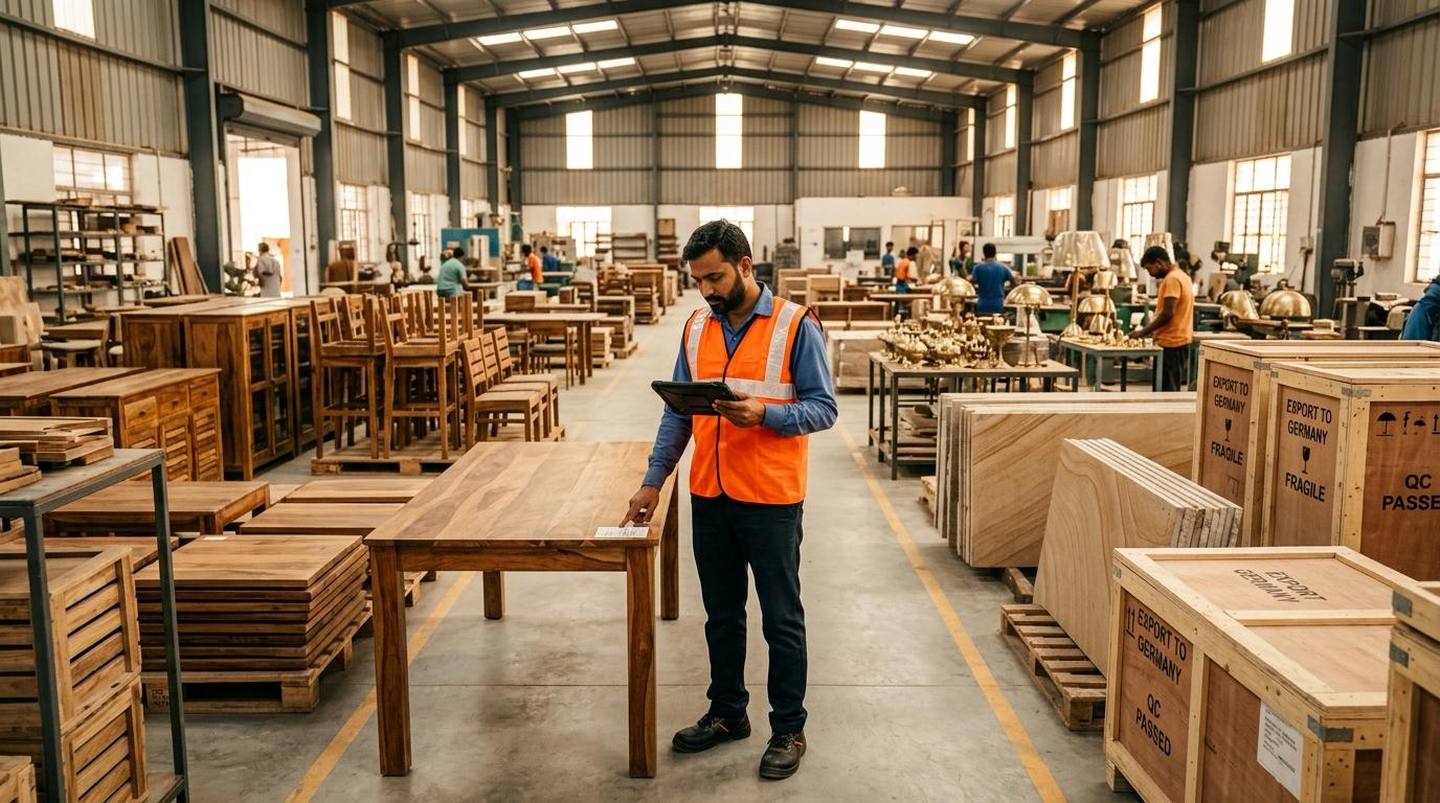
Many overseas buyers inspect finished goods but skip container loading supervision. This is a mistake. Without supervision, factories may stack heavy stone crates on top of fragile wooden cabinets, forget moisture desiccants, or experience carton count discrepancies.
During Container Loading Supervision, our inspector checks:
- Physical container interior: checking for leaks, odors, rust, or damp wooden floors.
- Carton handling: ensuring export boxes are placed right-side-up and heavy items are secured at the base.
- Moisture protection: verifying industrial silica gel / calcium chloride hanging desiccants are installed.
- Container sealing: photographing the ISO 17712 high-security bolt seal in place before the truck leaves.
Frequently Asked Questions
Who pays for ocean freight?
Most international orders are purchased on FOB (Free on Board) terms. The factory covers all domestic transportation, export documentation, and loading costs up to the Indian port. You pay your chosen freight forwarder directly for the international ocean transit and destination duties.
How long does ocean transit take from India?
Transit from Mundra or Nhava Sheva takes approximately 25 to 35 days to European ports (Rotterdam, Felixstowe), 28 to 38 days to the US East Coast (New York, Savannah), and 35 to 45 days to the US West Coast (Los Angeles, Long Beach).
For more information, explore our container loading supervision service, read our India sourcing overview, or check our pre-shipment inspection guide.
Need On-The-Ground Export Coordination?
We supervise manufacturing, conduct pre-shipment inspections, and oversee container stuffing across North India.
Speak with an Export Specialist â