Why Jodhpur matters for sourcing

Mehrangarh Fort, Jodhpur — the Blue City. Below the fort walls: one of India's biggest furniture export hubs.
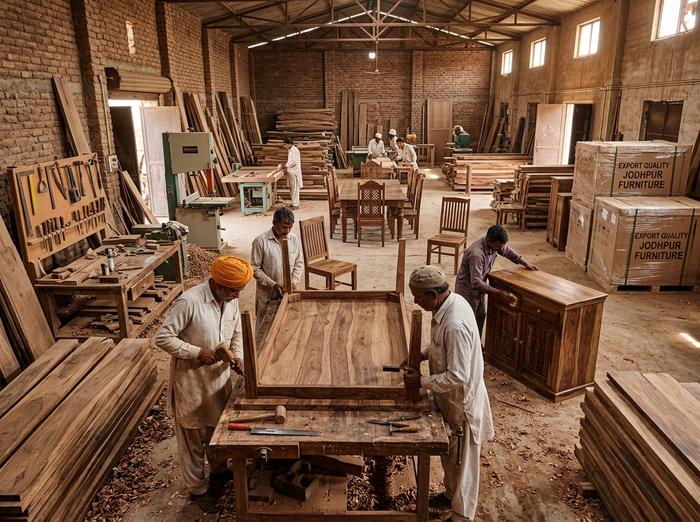
Jodhpur isn't just the Blue City tourists photograph. It's one of India's biggest furniture export hubs. The industrial belts of Basni and Boranada are packed with workshops making solid wood furniture for buyers across Europe, America and Australia. Sheesham, mango wood, acacia — this is where it gets cut, seasoned, joined and packed.
But here's the thing nobody tells you: Jodhpur has hundreds of furniture units, and the gap between the good ones and the bad ones is enormous. Some workshops run proper kiln-drying chambers and export year-round. Others are three guys with hand tools who'll subcontract your order to someone you've never met. From your desk in London or Texas, they all look the same on a B2B website.
That's why we're here. We live here. We know which gates to walk through and which ones to walk past.
What buyers actually source from Jodhpur
- Solid wood furniture — Sheesham and mango wood dining tables, cabinets, beds, consoles. The bread and butter of Jodhpur exports. Sheesham (Indian rosewood) is dense, dark and ages beautifully; mango is lighter, cheaper and takes paint well.
- Bone inlay and mother-of-pearl furniture — dressers, side tables, mirrors, bedside cabinets. Beautiful, fiddly, and easy to get wrong. The inlay work is genuinely handmade, which means every piece varies slightly.
- Sandstone and paving — Jodhpur sandstone in reds, pinks and buffs, cut for paving, cladding and landscaping. Big with UK and Australian buyers.
- Iron-wood crafts — the classic Jodhpur mix of reclaimed wood and wrought iron: coffee tables, shelving, industrial-style pieces. Very popular with American buyers.
- Architectural antiques — carved teak doors, haveli columns, old jharokhas (balcony windows), stone brackets. Genuine old pieces, not the distressed-new stuff (more on that below).
How sourcing actually works here
Let us walk you through what really happens when you place an order in Jodhpur — the version without the sales pitch.
First, finding the right workshop. There are roughly three tiers here. Tier one: proper exporters with 50–200 workers, kiln chambers, in-house finishing, and existing EU/US clients. Tier two: solid mid-size units (15–50 workers) that do good work but need hand-holding on export paperwork and QC. Tier three: small workshops that can carve beautifully but have no clue about moisture specs or export packing. Most online listings won't tell you which tier you're talking to. We will — after we've been inside the gate.
Then, samples. You'll get a sample. It'll probably look great — samples always do, because the master craftsman makes them personally. The question is whether the 500th piece looks like the first. That's why we insist on a sealed golden sample: one piece, signed off by you, locked in as the reference. Every production check gets measured against it.
Then production. This is where Jodhpur orders quietly go sideways. Timber arrives, gets cut, and somewhere in the rush the kiln-drying gets shortened — or skipped. Finishing gets done in a dusty corner instead of the spray booth. Your "dedicated" factory hands half the order to a cousin's workshop. None of this shows up in email updates. It only shows up when someone physically walks in unannounced. That's our job.
Then dispatch. Jodhpur ships through the ICD (inland container depot) — containers get stuffed here, sealed, and railed to Mundra port. We supervise the loading: carton counts, packing condition, seal numbers photographed. Once that seal is on, whatever's inside is what your customer gets.
The traps buyers fall into here
We'll be blunt. These are the problems we see again and again with Jodhpur orders:
Wet wood
The number one killer. Timber that hasn't been kiln-dried properly — or at all — looks fine in the factory. Then it crosses the ocean, and your dining table warps, splits or grows mould. We carry a pin moisture meter on every visit. If the readings are off, the goods don't ship. Simple as that.
"Antique" that's actually new
There's a whole industry here making brand-new furniture, distressing it, and selling it as vintage or antique. Sometimes that's fine — if you ordered distressed-new and you're paying distressed-new prices. The problem is when you pay antique prices for it. We check joinery, timber ageing and construction methods so you know what you're actually buying.
The subcontract shuffle
You audit a nice factory. Then your order quietly gets handed to a smaller workshop down the road that you've never seen. We do unannounced checks during production, not just one visit at the start. If the work moves, we find out.
Finish roulette
The sample had a beautiful matte lacquer. The bulk order arrives glossy, or patchy, or a different shade entirely. We approve a sealed golden sample and check production against it — piece by piece, not "looks about right."
What happened to a buyer we now work with: A furniture retailer in Germany ordered 200 Sheesham dining tables from a Jodhpur supplier he'd found online. The samples were perfect. The container arrived with 40% of the tabletops warped beyond sale. Nobody had checked the timber moisture — the factory had skipped kiln-drying to hit the delivery date. That one container cost him more than two years of our fees would have.
Now we check his moisture readings before every shipment leaves. He hasn't had a warped tabletop since.
Our quality checks, specifically
When we inspect a Jodhpur furniture order, here's what we're actually doing — not the brochure version:
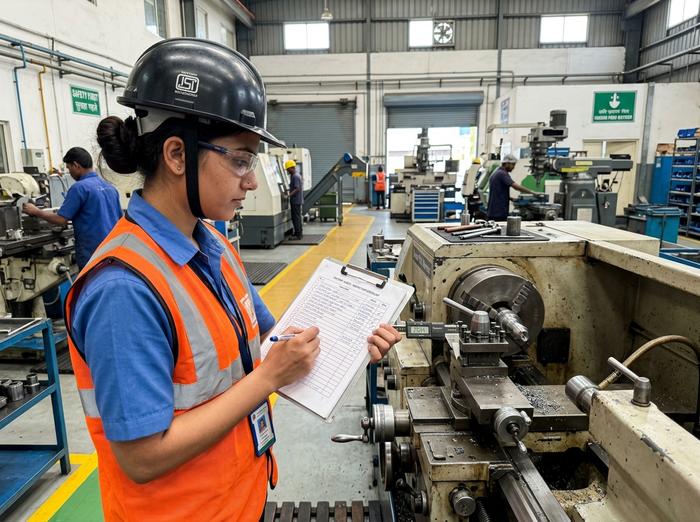
- Moisture testing: calibrated pin meter, random pieces from the batch, tested against the spec we agreed with you (usually 8–12% for export furniture). We write down every reading.
- Joinery check: we look at how the pieces are actually put together — mortise and tenon vs. just glue and hope. We stress-test joints on sample pieces.
- Finish check: held against the golden sample in natural light. Colour, sheen, coverage — including the bits nobody sees (undersides, backs, insides of drawers).
- Dimensions: tape measure, not eyeballing. A 2cm difference on a dining table matters when your customer tries to fit chairs under it.
- Packing: export cartons, corner protection, silica gel for the sea voyage. Then we watch the container being loaded and photograph the seal.
Local market insights worth knowing
A few things about Jodhpur that you won't find in a sourcing guide:
Timber prices move. Sheesham prices have been climbing — good seasoned Sheesham isn't cheap anymore, and if a quote looks too good, the wood probably isn't seasoned. Mango wood is the budget alternative and it's perfectly good for painted or distressed pieces. Ask what timber you're actually getting, in writing.
Diwali shuts everything. For about two weeks around Diwali (October/November), Jodhpur's workshops basically stop. Workers go home to their villages. If your Christmas stock depends on a November shipment, plan for it in August — not October.
Summer is brutal. May and June hit 45°C+. Finishing quality can suffer — lacquer dries too fast, workers slow down. It's not a reason to avoid summer production, but it's a reason to have someone checking.
The best workshops don't advertise much. The busiest exporters here get their orders through relationships and repeat buyers, not Google ads. If you only talk to the factories with the slickest websites, you're missing the best ones. We know them because we've been visiting for years.
What we actually do for you in Jodhpur
Because we're based here, this isn't a fly-in-fly-out operation:
- Before you pay a deposit: we visit the factory, check the machinery is real and running, verify GST and export registrations, look at the timber stock (kiln-dried or not?), and send you a photo report. You decide with your eyes open.
- During production: we show up unannounced, check work in progress against your approved sample, and test moisture on random pieces.
- Before dispatch: full pre-shipment inspection — dimensions, finish, joinery, packaging — with photos of everything, including the container loading and the seal number.
- Paperwork: we make sure the export docs, packing list and fumigation certificates are in order before the container leaves the dry port.
We're a sourcing and QC consultancy — not a manufacturer, not a trader. We don't take a cut from factories. Our fee comes from you: either 5–10% of the order value, or a monthly retainer of $1,500–$3,000 if you're buying year-round. Everything quoted in writing before we start.
Questions buyers ask us about Jodhpur
Can I visit the factories with you?
Of course. Plenty of buyers fly in and we take them around Basni and Boranada for a day or two. You'll see more in two days with us than in two weeks on your own — we know who's worth visiting. Jodhpur airport connects via Delhi and Mumbai.
How do I know the wood is properly kiln-dried?
You don't — until someone tests it. We use calibrated pin moisture meters on every inspection and test against the specification we agree with you upfront (typically 8–12% for export furniture). If a factory won't let us test, that's your answer.
What are realistic lead times?
For solid wood furniture: 8–12 weeks from approved sample to shipment, depending on order size and finish complexity. Anyone promising 3 weeks for 500 pieces is either lying or subcontracting. We'll tell you what's actually achievable before you commit.
Do you handle genuine antiques export?
Yes, and this matters: genuine antiques (over 100 years old) need an ASI (Archaeological Survey of India) clearance to leave the country legally. We check the paperwork so your "antique" doors don't get seized at the port. If a dealer can't produce provenance, assume it's reproduction.
What's the minimum order?
It depends on the factory, but most decent Jodhpur workshops want at least a 20ft container's worth (or equivalent value) to take you seriously. For smaller trial orders, we can sometimes consolidate with other buyers' goods. Ask us — we'll tell you honestly what's workable.