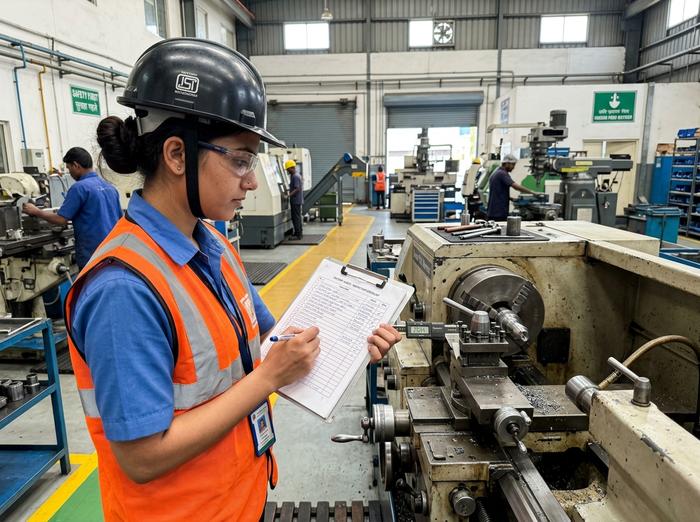
Sourcing from India offers immense advantages in craftsmanship, competitive labor, natural raw materials, and diversification away from single-country supply chains. However, international buyers — whether importing Jodhpur wooden furniture, Agra stonework, Moradabad brassware, or Pan-India textiles — frequently face a critical hurdle: inconsistent production quality and unverified factory claims.
A professional on-site supplier audit is your first line of defense before transferring advance deposits. This comprehensive checklist provides global procurement teams, importers, and brands with an actionable, 7-stage framework to evaluate Indian factories, verify production capacities, and enforce Acceptable Quality Limit (AQL) standards.
1. Legal Entity & Regulatory Verification (Pre-Audit Due Diligence)
Before setting foot in a manufacturing facility or releasing funds, verify that the supplier is an established, compliant business entity in India:
- Corporate Registration (MCA / RoC): Confirm the Company Identification Number (CIN) or Registrar of Companies filing to ensure the entity is active and legitimate.
- Goods and Services Tax Identification Number (GSTIN): Cross-verify the supplier's GST status on the official GST portal. Check that their filing status is regular, active, and registered in the state where manufacturing occurs.
- Import Export Code (IEC): Verify the Directorate General of Foreign Trade (DGFT) database to confirm an active 10-digit IEC issued in the company's name.
- Bank Account Verification: Ensure proforma invoices list a commercial bank account held in the exact legal company name — avoid personal accounts or third-party intermediaries.
- RCMC (Registration-cum-Membership Certificate): For export promotion benefits, check registration with relevant Export Promotion Councils such as EPCH for handicrafts, CEPC for carpets, or FIEO for general trade.
2. Factory Ownership vs. Trading Intermediary Audit
Many international buyers unknowingly deal with traders or commission agents who present rented workshops or third-party facilities as their own factory:
- Premises Lease / Ownership Deed: Review utility bills (electricity and industrial water) and lease deeds under the company's registered name.
- Physical Signage & Geographic Verification: Verify permanent exterior and interior signage matching corporate registration records.
- Subcontracting Transparency: Document whether critical operations (such as kiln seasoning, casting, dyeing, or surface polishing) happen on-site or are outsourced to unmonitored secondary jobbers.
3. Production Capacity & Machinery Audit
Evaluate whether the supplier can meet your volume, lead times, and technical specifications without bottlenecking:
- Active Machinery Inventory: Document make, model, age, and maintenance logs for key production equipment (such as CNC cutting tables, hydraulic presses, automated stitchers, and powder-coating lines).
- Workforce Assessment: Count permanent vs. contract casual laborers on the floor. Verify shift schedules, daily run rates, and peak-season capacity ceilings.
- Raw Material Inventory Management: Check storage conditions (dry, palletized, humidity-controlled) and confirm traceability of input materials (such as VRIKSH or FSC certification for hardwoods like Sheesham and Mango wood).
- Tooling & Mold Storage: Ensure dedicated, cataloged, and rust-free storage for client-specific molds and fixtures.
4. Quality Management System (QMS) & In-Line QC
A dependable supplier prevents defects before goods reach final packing. Check the factory's quality architecture:
- Incoming Material Quality Control (IQC): Are incoming raw materials tested against benchmark parameters before entering production lines?
- Work-in-Progress (WIP) Inspections: Are defect checkpoints established between critical production stages (e.g., after welding, before plating; after assembly, before polishing)?
- Defect Quarantine Area: Is there a clearly marked, physical 'Reject / Rework' holding area to prevent defective units from accidental re-entry into the packaging line?
- Calibration Logs: Inspect calibration certificates for measurement instruments (vernier calipers, moisture meters, drop testers, coating thickness gauges).
5. Standard AQL Sampling Table & Defect Classification
Independent quality control in India follows international standard ISO 2859-1 (ANSI/ASQ Z1.4). Defect thresholds must be clearly established in your Purchase Order:
- Critical Defects (AQL 0.0): Any defect that endangers end-user safety or violates legal/regulatory compliance (such as exposed sharp edges, mold, live electrical hazard, or structural collapse risk). Zero tolerance is accepted.
- Major Defects (AQL 2.5): Flaws that affect product functionality, durability, or saleability (such as significant dimension deviations, structural cracks, faulty hardware, or visible finish blisters).
- Minor Defects (AQL 4.0): Cosmetic imperfections that do not impair function or marketability (such as minor scuffs, slight color variation within tolerance, or removable dust).
- Benchmark Inspection Level: For consumer and commercial goods, General Inspection Level II is the standard benchmark for batch sampling.
6. Pre-Shipment Inspection (PSI) Execution Checklist
A Pre-Shipment Inspection should only occur when at least 80% of the batch is completely finished and export-packed:
- Random Carton Selection: The inspector must select sample cartons randomly across the warehouse, never allowing factory staff to hand-pick sample boxes.
- Quantity & Carton Count Verification: Reconcile packed cartons against the commercial packing list and purchase order.
- Packaging & Drop Testing: Perform an ISTA 1A carton drop test (1 corner, 3 edges, 6 faces) to confirm export cartons withstand sea/air freight stresses. Check barcoding, shipping marks, warning labels, and silica gel desiccant placement.
- On-Site Physical & Stress Tests: Measure moisture content in timber (typically target 8%–12% to prevent warping and mold during maritime transit), perform 3M tape tests for paint adhesion, and execute full dry-assembly of flat-pack goods.
7. Social Compliance & Environmental Safety (ESG)
- Child & Forced Labor Prohibition: Strict age-verification records for all workers on premises.
- Fire Safety & PPE: Accessible, inspected fire extinguishers, unblocked emergency exits, and proper protective gear (respirators, safety goggles, ear protection) in finishing areas.
- Waste & Chemical Disposal: Compliant storage and disposal of volatile solvents, lacquers, and industrial effluent.
Conclusion & Next Steps
Conducting a thorough factory audit before signing purchase contracts saves tens of thousands of dollars in rejected shipments, shipping chargebacks, and brand reputation loss. For international buyers who cannot travel to India for every production run, partnering with an independent local inspection agency provides the transparency and verification required to scale safely.
Need Ground-Level Sourcing or Quality Control in India?
QualityLink Global is based in Jodhpur. We perform on-site factory audits, pre-shipment inspections, and container loading supervision across Rajasthan and North India.
🛒 Related Products & Services
Interested in sourcing these products? We are based in Jodhpur and can help. Get a free quote →