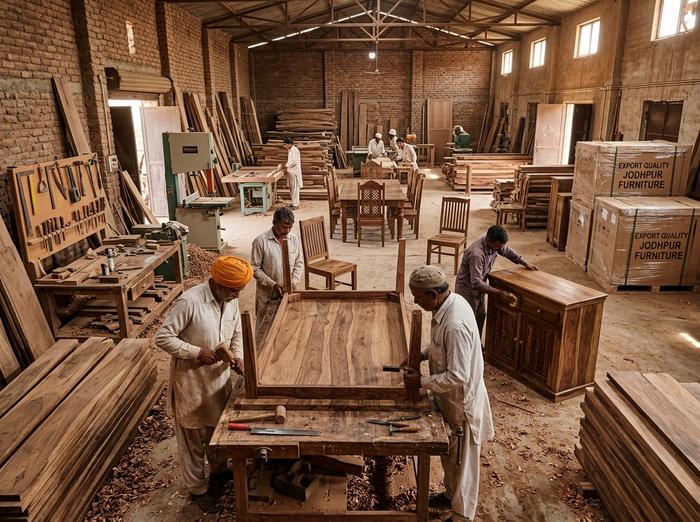
The two most commonly used woods in Indian furniture export are sheesham (Indian rosewood) and mango. Understanding their differences helps you choose the right material for your market.
Sheesham (Indian Rosewood)
Density: High. Hardness: Hard. Grain: Beautiful, prominent, varied. Colour: Golden brown to dark reddish-brown with streaks. Durability: Excellent — resistant to termites and decay. Price: Premium. Best for: high-quality dining tables, beds, cabinets, furniture that needs to last decades.
Mango Wood
Density: Medium. Hardness: Medium-soft. Grain: Subtle, less prominent. Colour: Light brown, takes paint and stain well. Durability: Moderate — less resistant to moisture and insects. Price: Affordable. Best for: painted/whitewashed furniture, rustic designs, budget-conscious markets.
When to Choose Each
Choose sheesham for: premium markets, natural-finish furniture, outdoor-adjacent applications, and products where durability is a selling point. Choose mango for: painted/distressed finishes, budget-friendly product lines, indoor-only furniture, and markets where price sensitivity is high.
The Quality Question
Both woods can produce excellent furniture — or poor furniture. Wood quality depends on: proper drying (moisture content 8-12%), grading (free of excessive knots, cracks, and defects), and the skill of the craftspeople working with it.
Need Ground-Level Sourcing or Quality Control in India?
QualityLink Global is based in Jodhpur. We perform on-site factory audits, pre-shipment inspections, and container loading supervision across Rajasthan and North India.
🛒 Related Products & Services
Interested in sourcing these products? We are based in Jodhpur and can help. Get a free quote →