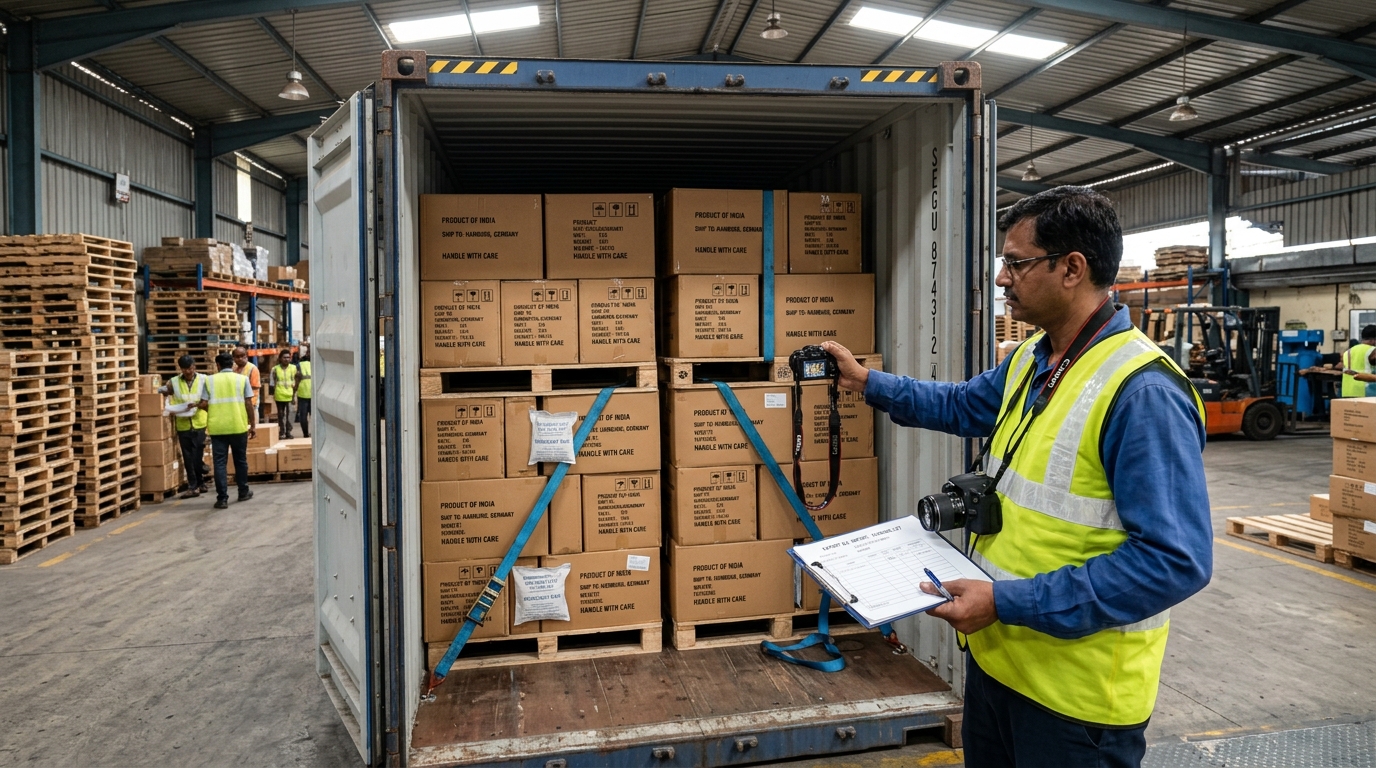
Once an overseas supplier receives your 70% balance payment and ships your container, your leverage drops to zero. If cartons arrive crushed, short-shipped by 50 units, or drenched in seawater because of a rust hole in the container roof, recovering damages from shipping lines or factories can take months of disputed claims.
A professional Container Loading Inspection (CLI)—conducted in real-time as cargo is transferred from the factory staging warehouse into the ocean shipping container—is your final line of defense.
However, not all inspection reports are created equal. A brief PDF with four fuzzy WhatsApp pictures of boxes stacked inside a dark container is worthless. Here is the exhaustive photographic and operational checkpoint protocol every international importer should demand from their QC team in India.
Phase 1: Empty Container Structural & Weatherproof Verification
Before a single carton or wooden crate crosses the threshold, the empty container must be thoroughly inspected and photographed:
| Checkpoint | Required Photographic Evidence | Why It Protects You |
|---|---|---|
| Container Exterior & Number | High-res photo of container door showing 4-letter prefix and 7-digit number (e.g., MSKU 123456-7). |
Confirms the goods were packed into the exact container specified on your Bill of Lading. |
| CSC Safety Approval Plate | Clear macro photo of the metal CSC plate showing Max Gross Weight, Tare Weight, and Payload. | Ensures container payload rating can legally support cargo weight without structural floor failure. |
| Light & Hole Check (Inside Out) | Inspector steps inside, closes doors completely, and photographs the interior with flash off. | Any pinhole of daylight through roof seams or corners indicates water leakage points that cause transit mold. |
| Floor Cleanliness & Odor Check | Wide shot of container floorboards. | Identifies chemical residues, fuel spills, wet mud, or protruding nails that could tear cartons or contaminate goods. |
| Door Rubber Gaskets & Locking Bars | Close-up photos of black EPDM rubber perimeter seals along both door leaves. | Cracked or missing gaskets permit sea spray and tropical monsoon rain to enter during voyage. |
Phase 2: Cargo Condition, Carton Count & Barcode Verification
As goods move from warehouse pallets to the container floor, the inspector monitors the physical product packaging:
- Random Sampling Carton Condition: Photographs of carton exterior condition, verifying no crushed edges, water stains, torn tape, or punctures.
- Shipping Marks & Barcode Scanning: Clear macro photograph of export shipping marks printed on cartons: PO Number, SKU Code, Item Description, Gross/Net Weight, and scannable EAN/UPC barcodes.
- Continuous Tally Counter Count: Photo of the inspector's mechanical hand tally counter and physical tally sheet verifying exact carton count per SKU, preventing short-shipment disputes.
Phase 3: Progressive Loading & Stowage Arrangement
Loading a shipping container is a structural puzzle. To guarantee cargo stability, your inspector must document three distinct stages:
- First Tier (25% Loaded): Proves heavy items (such as solid timber tables or stone crates) are placed on the floor, rather than stacked on fragile decor.
- Midway Point (50%–75% Loaded): Documents interlocking stacking ("bricklayer pattern") and confirms void spaces are secured with dunnage air bags or foam blocks.
- Full Stowing (100% Loaded): Proves vertical clearance to the ceiling, installation of cargo lashing straps across the container door opening, and placement of high-capacity container desiccant bags.
Phase 4: Door Closure & ISO 17712 High-Security Bolt Seal
The closing sequence is the legal linchpin of your entire shipment:
- Left Door Closed First: Photo showing the left door leaf latched and locked into position.
- Right Door Closed: Photo showing both door locking handles in the closed vertical position with safety catches engaged.
- Bolt Seal Affixed: A high-security bolt seal compliant with ISO 17712 must be inserted through the locking cam on the right door handle and clicked shut.
- Macro Seal Number Photo: A razor-sharp, macro photograph showing the unique alpha-numeric seal number (e.g.,
QLG 9876543). This photo proves the container was sealed at the factory and was not opened or tampered with before reaching the port terminal.
Never Ship Blind from India
QualityLink Global conducts comprehensive Container Loading Inspections across Rajasthan and North India. Receive a complete 50+ photo report and verified tally within 24 hours of container dispatch. Learn More About Container Loading Inspections →