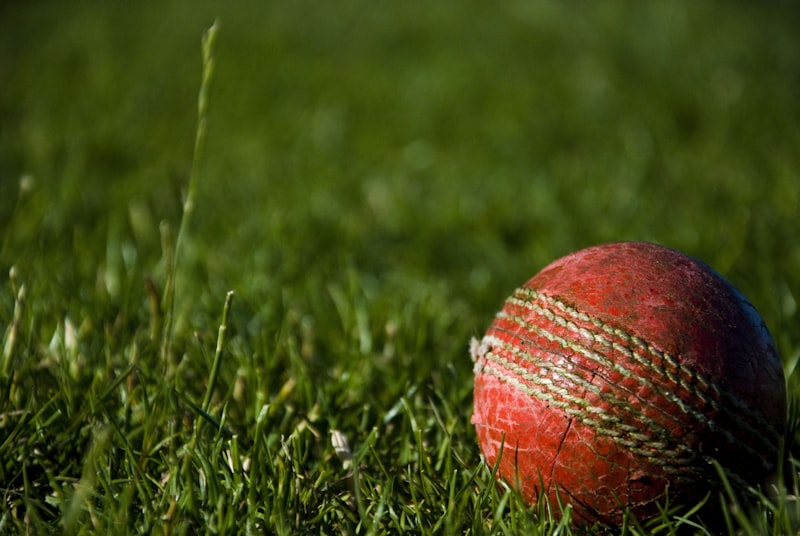
Cricket bats and leather balls are precision equipment. Even a slight variation in wood density, handle gluing, or cork core lamination will completely alter player performance and durability. If defective goods reach retail stores or sports clubs in the UK, Australia, South Africa, or the Caribbean, the cost of return logistics and brand damage is catastrophic.
Here is the practical, step-by-step checklist QualityLink Global uses during pre-shipment inspections at sports goods factories in Meerut and North India.
Part 1: The Cricket Bat Pre-Shipment Inspection Protocol
1. Willow Grading & Grain Structure Verification
- Grain Count & Straightness: Grade 1 English Willow must show 7–12 clean, straight grains across the face with minimal butterfly stain or redwood speckle. Grade 2 typically features 5–8 grains with minor cosmetic blemishes.
- Heartwood / Sapwood Ratio: Ensure the face is predominantly clean white sapwood, or note the exact percentage of darker heartwood.
- Artificial Grain Detection: Inspect under high-lumen magnification to ensure grains are natural growth rings and not printed or laser-etched onto bleached low-grade wood.
2. Dimensional & Profile Tolerances (MCC Law 5 Compliance)
- Maximum Width: Must not exceed 10.8 cm (4.25 inches) through a strict MCC wooden gauge.
- Maximum Edge Thickness: Must not exceed 4.0 cm (1.56 inches).
- Maximum Overall Depth (Spine): Must not exceed 6.7 cm (2.64 inches).
- Total Length: 85.7 cm (33.75 inches) standard for Men's Full Size Short Handle (SH).
3. Moisture Content & Weight Verification
- Moisture Check: Calibrated pin meter inserted into the toe and shoulder. Reading must register between 10.0% and 12.0%. Timber above 13% will feel dead and suffer toe cracking upon match impact.
- Weight Scale Check: Bat weighed with grip and toe guard. Range must strictly match buyer's purchase order (e.g., 2lb 8oz to 2lb 10oz ±0.5oz).
4. Handle Construction, Alignment & Ping Test
- Handle Joinery: Checking the 3-rubber or 4-rubber spring cane splice joint for direct epoxy bonding.
- Handle Alignment: Sighting down the spine to ensure the handle is perfectly aligned with the blade center line (zero left/right tilt).
- Mallet Ping Test: Tapping a 160g lignum vitae or hardwood ball mallet from toe to shoulder to confirm rebound acoustics and ensure no hidden internal fissures.
Part 2: The Leather Cricket Ball Inspection Protocol
1. Core Construction & Weight
- Weight Tolerance: 155.9g to 163.0g for men's 5.5oz balls (checked on digital scale calibrated to 0.01g).
- Circumference Ring Test: Must pass through 22.9 cm ring and NOT pass through 22.4 cm ring.
- Destructive Core Sample: 1 ball per batch dissected to verify layered cork-and-worsted-yarn core vs. illegal synthetic sawdust/rubber filler.
2. Leather Shell & Seam Integrity
- Leather Thickness: Vegetable/alum-tanned cowhide shell thickness (3.5mm ±0.3mm).
- Seam Stitch Count: Count of primary hand-sewn seam stitches (75–85 stitches) with heavy-duty polyester/linen thread.
- Seam Height & Straightness: Checking seam prominence for proper grip and seam movement without wobbling.
3. Rebound & Shape Retention Test
- Drop Test: Dropping ball from 2.0 meters onto solid polished granite; rebound must measure between 1.15m and 1.30m.
- Compression Test: Applying 150 kg static load; ball must recover spherical shape within 0.2mm tolerance.
Get Professional Boots on the Ground in Meerut
Before releasing final payment to your Meerut sports goods supplier, ensure your shipment has passed an independent on-site inspection. QualityLink Global provides fast-turnaround, photo-backed Meerut sports inspections across all industrial sectors.
Book a Cricket Equipment Inspection
Speak directly with our technical sourcing and inspection team to protect your upcoming order.
Book an Inspection in Meerut →