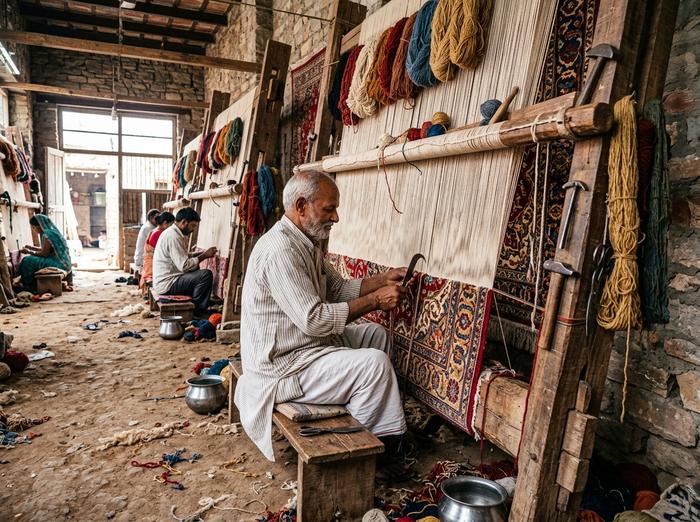
India produces three main categories of carpet, each with different production methods, quality levels, price points, and market positioning. Understanding these differences helps you choose the right product for your market.
Hand-Knotted Carpets
The most labour-intensive and premium category. Each knot is tied by hand on a vertical loom. A single carpet can take weeks to months. Quality is measured in KPSI (knots per square inch). Higher KPSI means finer detail and higher price.
Hand-Tufted Carpets
Made with a tufting gun that punches yarn through a pre-woven backing. Much faster to produce than hand-knotted. Good mid-range option with attractive designs. Less durable than hand-knotted but more affordable.
Flat-Weave (Dhurries, Kilims)
No pile — yarn is woven flat into the backing. Durable, easy to clean, reversible. Excellent for contemporary interiors. The most affordable category. Includes cotton dhurries, wool kilims, and jute rugs.
Which to Choose
- Hand-knotted: Premium markets, collectors, interior designers, high-end retail
- Hand-tufted: Mid-range retail, home décor stores, online marketplaces
- Flat-weave: Budget-conscious markets, contemporary décor, casual interiors
Price Comparison
For a 2x3 metre carpet: hand-knotted ($500-5000+), hand-tufted ($100-500), flat-weave ($30-200). Prices vary enormously based on materials, design complexity, and knot density.
Need Ground-Level Sourcing or Quality Control in India?
QualityLink Global is based in Jodhpur. We perform on-site factory audits, pre-shipment inspections, and container loading supervision across Rajasthan and North India.
🛒 Related Products & Services
Interested in sourcing these products? We are based in Jodhpur and can help. Get a free quote →